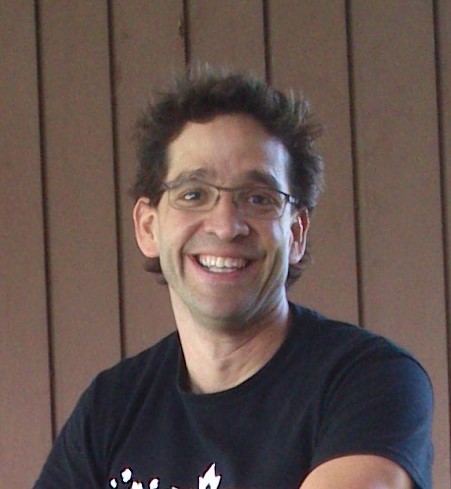
Gustavo Carrero
Assistant Professor, Mathematics

2020 Gustavo Carrero
Last updated September 23, 2020

Welcome to my Academic Portfolio
This academic portfolio is a summary of my activities, accomplishments and contributions as a faculty member of Athabasca University in the areas of teaching, research and community service. My academic information previous to my position at Athabasca University, a full CV and my contact information are found in the introduction section about myself.About Me
My journey of mathematics started in Venezuela, where I obtained both my Bachelor and Master of Science in Mathematics, from Universidad Simón Bolívar and Universidad de Los Andes, respectively. During my Master's degree studies, I had the chance to gain teaching experience as an Instructor for undergraduate mathematics courses. Also, my interest in the field of mathematical biology sparked with the topic of mathematical models in epidemiology, which was the theme of my Master's thesis under the supervision of Dr. Marcos Lizana.My interest in Mathematical Biology kept growing throughout my Ph.D. in Applied Mathematics at the University of Alberta, where I wrote my PhD thesis on the spatio-temporal dynamics of proteins within the cell nucleus under the supervision of Dr. Gerda de Vries. This research work had a significant component of analysis of experimental data, which motivated me to pursue my postdoc in Dr. Michael Hendzel's lab at the Cross Cancer Institute, Edmonton, where I could obtain some experimental experience, continue developing mathematical models to analyse experimental data, and teach basic undergraduate level courses for the Department of Mathematical and Statistical Sciences at the University of Alberta.
In the year 2007, when I finished my postdoc, I had the great fortune to join the AU (Athabasca University) familiy as an Assistant Professor in Mathematics for the Centre for Science. I then started what I call the second chapter of my academic life, which has allowed me to meld together my passion for science with a stable job within an academic environment conducive to learning and growing.
This academic portfolio intends to narrate my journey as an Assistant Professor at Athabasca University. It provides a summary of my activities, accomplishments and contributions in the areas of teaching, research and community service. Also, I am including below a link to my CV (Curriculum Vitae) and my contact information.
Download CV:
Contact Information:
Address:
AU-Edmonton
1200, 10011 - 109 St.
Edmonton, AB
T5J 3S8
e-mail: gustavoc@athabascau.ca
Phone: (780)421-5065
Teaching
My view of teaching has been broadened and enriched at Athabasca University, especially due to the distance nature of the delivery of courses. While teaching mathematics courses at AU, I have realized that the process that links the teaching or course content with the students' experience of learning involves not only the professor, the student and their passion and willingness to teach and learn, but also the continuos work of a course team (course coordinator, editor, learning designer, course assistant, production group, tutor, among others) that carefully strives to make the students' learning a meaningful and gratifying experience. Being aware of the dynamical involvement of a course team that bridges the experience of teaching with that of learning has shaped me as an AU educator.I describe below my teaching activities and contributions during my Assistant Professorship at AU within the areas of course coordination, tutoring, course development and revisions, lecturing, and student supervsion.
Course Coordination
I think that being the coordinator of an AU course is like being the director of the orchestra, who makes sure that the performance touches the audience's ears and hearts in a pleasant way. Similarly, the coordinator of an AU course directs the course team so that the delivery of the course is received by the students in a meaningful and beneficial way. Typically, a course coordinator keeps the course updated and running; revises the course or supervises its revision; interacts with the course development team, the production group, and the publisher of the course textbook; supervises one or more tutors; interacts with the course assistant for the administrative aspects of the course; evaluates the transfer credits related from other institutions equivalent courses, and interacts with the students for issues that go beyond the tutors’ duties. These are some of the tasks that a course coordinator needs to oversee for the course orchestra to perform its best.
Below is the list of courses (with a link to their syllabi and learning outcomes) I coordinate, together with the years I have coordinated them, and the corresponding number of tutors under my supervision for each course.
| Course | Years of coordination | Number of tutors |
|---|---|---|
| MATH 216 (Computer-oriented approach to Statistics) | 2007 - present | 3 |
| MATH 270 (Linear Algebra I) | 2007 - present | 4 |
| MATH 271 (Linear Algebra II) | 2007 - present | 2 |
| MATH 366 (Complex Variables) | 2010 - present | 1 |
| MATH 376 (Ordinary Differential Equations) | 2007 - present | 2 |
| MATH 476 (Partial Differential Equations) | 2013 - present | 1 |
| SCIE 480 (Research Methods in Science) | 2017 - present | 1 |
Tutoring
Tutoring is the front line activity of teaching at Athabasca University. Tutors are like the chess pawns; they have direct contact with the students and without them the joyful battle to pass on knowledge would most probably be lost. Tutors are academic experts who support the students' learning throughout the duration of the course by answering their questions related to the course content and providing them with feedback on their course work. The presence of a tutor gives the students confidence and reassures them that they are not alone in the learning journey of distance education.
Below is the list of courses I have tutored with the corresponding years of tutoring. I am also including the tutoring of courses that I have covered temporarily for my colleagues during their leaves.
| Course | Tutoring years |
|---|---|
| MATH 270 (Linear Algebra I) | 2007 - present |
| MATH 271 (Linear Algebra II) | 2007 - present |
| MATH 365 (Multivariable Calculus) | covered temporarily |
| MATH 366 (Complex Variables) | covered temporarily |
| MATH 376 (Ordinary Differential Equations) | covered temporarily |
| MATH 476 (Partial Differential Equations) | 2013 - present |
| MATH 495 (Mathematics Projects) | 2007 - 2008 & 2020 |
Course Development and Revisions
The development of new courses and revision of existing courses have also been part of my teaching contributions. In my experience, there are two satisfying aspects in developing and revising a course, the first one is the process of developing or revising it, and the second one is the end result of the developed or revised course in the hands of the students.
For me, the most challenging aspect of developing a new course is writing the course material, and in particular the Study Guide, which guides the students through the course content throughout the duration of the course. The process of developing and revising a course requires working with a course development team, which includes a learning designer, an editor, a course assistant, members of the exam unit and production group, and sometimes another co-author of the course. Thanks to this professional team, the course material (study guide, exams, assignments, and other support material) can reach the students in a clear and understandable way.
Below is the list of courses that I have developed, revised or supervised their revision.
| Course | Task | Year(s) |
|---|---|---|
| MATH 216 (Computer-oriented approach to Statistics) | Supervison of revision | 2011, 2017 & 2020 |
| MATH 270 (Linear Algebra I) | Revision | 2009 & 2020 |
| Re-development | 2016 | |
| MATH 271 (Linear Algebra II) | Revision | 2018 & 2020 |
| Re-development | 2017 | |
| MATH 366 (Complex Variables) | Revision | 2018 & 2020 |
| MATH 376 (Ordinary Differential Equations) | Revision | 2008, 2010, 2018 2019 & 2020 |
| MATH 476 (Linear Algebra I) | Revision | 2020 |
| Development | 2013 | |
| SCIE 480 (Linear Algebra I) | Revision | 2020 |
| Development | 2017 |
Lecturing
During my time at Athabasca University I have had the opportunity to lecture some mathematics courses face to face at different institutions. I am very grateful for the support that I have received from the Faculty of Science and Technology at Athabasca University to be able to keep developing my teaching skills in a traditional classroom setting, as I believe that some of these skills are transferable to the online distance setting of math courses at AU.
Below is the list of courses that I have taught in a classroom setting during my Assistant Professorship position at Athabasca University.
| Course | Institution | Year(s) |
|---|---|---|
| MATH201 (Differential Equations) | University of Alberta, AB, Canada | 2014 |
| MATH334 (Introduction to Differential Equations) | University of Alberta, AB, Canada | 2015 & 2018 |
| MATH337 (Introduction to Partial Differential Equations) | University of Alberta, AB, Canada | 2012, 2013, 2016 & 2017 |
| CO6112 (Tópicos Especiales: Introducción a la Biología Matemática) | Universidad Simón Bolívar, Caracas, Venezuela | 2010 |
Student Supervision
I have great thankfulness for the academic learning experience that I received from my supervisors during my math career. I can joyfully say that the education, academic training, support, and trust received from my undergraduate, M.Sc., Ph.D. and post-doc supervisors, have had a very significant and positive influence in my current academic and professional life.
I think the personal scientific training received from a supervisor goes beyond passing on knowledge as it also has the capability of touching the fibers that move one’s passion for a particular field of study (applied mathematics, in my case). Since I have been positively inspired by my supervisors, I would like to think that I have followed their example and supervised my students trusting their potential, giving them confidence, and passing on both knowledge of and passion for applied mathematics. A very pleasant and unexpected outcome in my experience as supervisor is that I end up learning so much from my students. Thus, as a supervisor I am also thankful to my students.
Below is the list of undergraduate and graduate students who I have supervised as an Assistant Professor at Athabasca University, together with the corresponding research topic, education level of supervison and home institution, years of supervision, and my particular role.
| Student | Topic | Level | Institution | Year(s) | Role |
|---|---|---|---|---|---|
| Ben Passmore | Modelling the tree-mediated interaction between the Mountain Pine Beetle and Jack Pine Budworm | Undergraduate | Athabasca University, Canada | 2020 | Mitacs Researsch Training Award Supervisor |
| Carlos Contreras | Mathematical Modelling of the effect of low-dose radiation on the cell cycle | Graduate (Ph.D.) | University of Alberta, Canada | 2013-2020 | Co-supervisor |
| Juan Sebastian Salamando | Effect of periodic emotions on the dynamics of a happiness model | Undergraduate | Pontífica Universidad Javeriana Cali, Colombia | 2018-2020 | Thesis Co-supervisor |
| Jingyi Lin | Modelling the formation of habits | Undergraduate | Huazhong University of Science and Technology (HUST), China | 2019 | Mitacs Globalink Supervisor |
| Kaitlyn Brown | Modelling the spread of happiness | Undergraduate | Queensland University of Technology, Australia | 2017 | Mitacs Globalink Supervisor |
| Joel Makin | Analysis of mathematical models of happiness | Undergraduate | University of Wollongong, Australia | 2016 | Mitacs Globalink Supervisor |
| Stephanie Mah | Modelling the dynamics of individual happiness | Undergraduate | University of Alberta, Canada | 2015 | MATH499 Project Supervisor |
| Isabella Lin | Modelling the spread of happiness as an infectious disease | Undergraduate | University of Alberta, Canada | 2014 | MATH496 Project Supervisor |
| Rochelle Nieuwenhuis | Mathematics of Single-Particle Tracking (SPT) | Undergraduate | University of Alberta, Canada | 2011 | Co-supervisor |
| Harun Kalayci | Mathematical analysis of Single-Particle Tracking (SPT) trajectories. | Graduate (M.Sc.) | University of Alberta, Canada | 2010 - 2012 | Co-supervisor |
| Carlos Contreras | Mathematical modelling of histone H1 dynamics | Graduate (M.Sc.) | Universidad Simón Bolívar, Venezuela | 2009 - 2011 | Co-supervisor |
| Vishaal Rajani | Mathematical analysis of Single-Particle Tracking (SPT) data | Graduate (M.Sc.) | University of Alberta, Canada | 2008 - 2010 | Co-supervisor |
Research
Within the broad discipline of Applied Mathematics my research field has been mainly Mathematical Biology, with focus in the development and analysis of mathematical models to understand particular processes at the cellular level; specifically, the spatio-temporal dynamics of proteins within the cell nucleus, the mobility of proteins on the cell membrane, and the effect of radiation on the cell cycle.Recently, I have become very interested in the field of Mathematical Psychology. In particular, in the development of mathematical models, using differential equations, to understand psychological processes related to wellbeing.
I describe below the details of these research interests, including collaborations, dissemination of results in the form of publications and conference presentations, current projects and sources of funding.
Interests and Collaborations
Spatio-temporal dynamics of proteins within the cell nucleus
My early research interest was the study of the spatio-temporal dynamics of proteins within the cell nucleus. In particular, the development of mathematical models to interpret experimental data describing the mobility of nuclear proteins and obtained using a fluorescence microscopy technique called FRAP (Fluorescence Recovery After Photobleaching). In a FRAP experiment, the proteins of interest are fluorescently tagged for their visualization and a small region of the cell nucleus is photobleached. Due to the mobility of the proteins of interest, the fluorescence in the photobleached region starts to recover. The experimental FRAP data, which is analysed through mathematical modelling, are obtained by recording this fluorescence recovery over time.When I started my position at Athabasca University, I continued my work on the spatio-temporal dynamics of nuclear proteins in collaboration with Dr. Michael Hendzel, Cross Cancer Institute and Department of Oncology, University of Alberta, and later on with Carlos Contreras, a M.Sc. student from Universidad Simón Bolívar, Venezuela. Our interest was on histone H1, a highly dynamic protein that diffuses throughout the nucleus and stabilizes the higher-order chromatin structure (DNA and associated proteins). Using partial differential equations to interpret histone H1 FRAP data, we were able to quantify the spatio-temporal dynamics of histone H1 and describe its assembly pathway to the chromatin structure.
Mobility of receptors on the cell membrane
The study of the mobility of receptors on the cell membrane has captured my attention as well. In particular, the analyis of SPT (Single Particle Tracking) data with individual-based mathematical models. In the context of cell membrane receptors, an SPT experiment consists in recording the spatial trajectories of single receptors on the cell membrane for the purpose of describing their movement. The analysis of these trajectories using mathematical techniques originally developed for the interpretation of animal movement has proven to be a very useful approach for describing the mobility of cell membrane receptors. For example, one can test the correlated random walk (CRW) model for membrane receptors using the same techniques (based on the calculation of the mean- and net-squared displacements) that are used in the analysis of animal movement.The research in this area was a collaboration with Dr. Gerda de Vries, Department of Mathematics and Statistical Sciences, University of Alberta, Dr. Christopher Cairo, Department of Chemistry, Univesity of Alberta, and a previous M.Sc. student, Vishaal Rajani. In particular, we were interested in adapting a first passage time (FPT) algorithm, originally developed for the interpretation of animal movement, to analyse SPT data from the cell receptor LFA-1 (Lymphocyte function-associated antigen) and identify the presence of heterogeneity and confined regions of diffusion.
Effect of low-dose radiation on the cell cycle
More recently, my research interest has been to study the effect of low-dose radiation on the cell cycle and survival fraction. Radiation therapy uses ionizing radiation to kill malignant cells (by damaging their DNA and reducing their ability to reproduce and survive) as part of cancer treatment. Using mathematical modelling, it is possible to analyze the effect of radiation on the cell cycle and provide insight into the behaviour of the cell survival fraction, which measures the ability of a population of cells to reproduce after ionizing radiation is applied.The development of mathematical models describing the effect of radiation on the cell cycle has been a collaboration with Dr. Gerda de Vries, Department of Mathematics and Statistical Sciences, University of Alberta, and a Ph.D. student, Carlos Contreras.
Mathematical modelling of the dynamics of happiness
Most recently, I have become particularly interest in understanding the psychological construct of happiness from a dynamical mathematical perspective. The idea of this scientific adventure has been to develop a mathematical model of happiness based on current positive psychology views of well-being where individuals, as proactive and self-determined beings, have the ability to master their well-being and potentially achieve lasting happiness.The exploration of this exciting research is in collaboration with Dr. Peter Malinowski, Research Centre for Brain and Behaviour, Liverpool John Moores University, Liverpool, United Kingdom, and Joel Makin, a Mitacs Globalink student from the School of Mathematics and Applied Statistics, University of Wollongong, Australia.
Student population dynamics within self-paced open degree programs
During my position as a FST (Faculty of Science and Technology)-Undergraduate Program Director at AU (Athabasca University), I became very interested in understanding the performance of the BSc programs at AU using mathematical modelling, and I started to develop a mathematical model, using differential equations, to understand the student population data of the BSc programs at AU from recent years. The model allowed for the quantification of the temporal dynamical performance of the programs through the estimation of the overall enrollment, engagement, withdrawal, and graduation rates, and for gaining insight into the particular dynamics of the self-paced open degree programs of the FST at AU.I currently continue this line of research in collaboration with Dr. Sami Houry, Institutional Research & Assessment Officer at Institutional Data Analysis, Athabasca University, and Karen Stauffer, previous Web Course Support Programmer Analyst at the Faculty of Science and Technology, Athabasca University, with the objective of offering a novel tool, given by a mathematical model , for assessing and quantifying the historical performance of self-paced open degree programs, and predicting the impact that the different model parameters may have in the future performance and output (number of graduates) of the programs.
Publications
My research accomplishments in the form of scientific publications during my Assistant Professorship at Athabasca University is summarized in the following list of referred journal articles, conference proceedings, abstracts, and articles in preparation (Note: Publications before my Athabasca University position can be found in my CV ):
Recently submitted
- G. Carrero, J. Makin, and P. Malinowski. A mathematical model for the dynamics of happiness. Submitted to R. Soc. Open Sci., 2020.
Referred Journal Articles
- C. Contreras, G. Carrero, and G. de Vries. A Mathematical Model for the Effect of Low-Dose Radiation on the G2/M Transition. Bulletin of Mathematical Biology, 81(10) (2019), pp. 3998-4021.
- C. Contreras, M. Villasana, M.J. Hendzel, and G. Carrero. Using a model comparison approach to describe the assembly pathway for histone H1. PLoS ONE 13(1) (2018): e0191562.
- G. Carrero, C. Contreras, and M.J. Hendzel. Visualizing the distribution of proteins and estimating their kinetic parameters using Virtual Photoactivated Fluorescence (VPAF). GSTF Journal on Bioinformatics and Biotechnology, 1 (2011), pp. 24-30.
- V. Rajani, G. Carrero, D.E. Golan, G. de Vries, and C.W. Cairo. Analysis of molecular diffusion by first-passage time variance identifies the size of confinement zones. Biophysical Journal, 100 (2011), pp. 1463-1472.
- N. Raghuram, G. Carrero, T.J. Stasevich, J.G. McNally, J. Th'ng, M.J. Hendzel. Core Histone Hyperacetylation Impacts Cooperative Behavior and High-Affinity Binding of Histone H1 to Chromatin. Biochemistry, 49 (2010), pp. 4420-4431.
- N. Raghuram, G. Carrero, J, P Th’ng, and M.J. Hendzel. Molecular dynamics of histone H1. Biochemistry and Cell Biology, 87 (2009), pp. 189-206..
Conference Proceedings
- G. Carrero, M.J. Hendzel. Virtual Photo Activated Fluorescence (VPAF): obtaining PAF data from FRAP experiments. Proceedings of the Annual International Conference on BioInformatics and Computational Biology (BICB 2011), BICB06, p.B-1-B-5.
- G. Carrero, N. Raghuram, J. Th'ng, and M. Hendzel. A Method for Assessing Kinetic Changes of Histone H1 after Post-Translational Modifications. AIP Conf. Proc. 1168, Vol.2 (2009), p.1306-1309.
Abstracts
- G. Carrero, C. Contreras, and M. J. Hendzel. Using Mathematical Modelling to Understand the Role of Linker Histone Dynamics in DNA Packaging. Journal of Proteins and Proteomics, Vol. 3, Number 2, (2012), JPP5-JPP6.
- N. Raghuram, G. Carrero, J. P Th'ng, and M. J Hendzel. Differential response of histone H1 variants to in vivo treatment of histone deacetylase inhibitors. Biochemistry and Cell Biology, 87 (2009), p.380.
Articles in preparation
- C. Contreras, G. Carrero, and G. de Vries. Carryover of a saddle-node bifurcation after transformation of a parameter into a variable. To be submitted to Nonlinear Differential Equations and Applications or to the Journal of Nonlinear Science.
Presentations
Presentations (invited talks, contributed talks, and posters) at conferences or workshops have been a significant component of the dissemination of my research results. My contribution in the form of presentations during my Assistant Professorship at Athabasca University is summarized in the following list (Note: Presentations before my Athabasca University position can be found in my CV ):
- Teaching mathematics courses online at Athabasca University. Challenges during the COVID-19 pandemic. Invited talk at the session “Experiencias en la docencia mediada por TIC (Tecnologías de Información y Comunicación)” at Foros REDIS (Red Colombiana de Programas de Ingeniería de Sistemas y Afines), August 11, 2020. Virtual meeting.
- Individualized study as a relevant mode of teaching mathematics courses remotely during the COVID-19 pandemic. Invited talk at the CMS (Canadian Mathematical Society) COVID-19 Research and Education Meeting (CCREM), July13-16, 2020. Virtual meeting.
- A mathematical model for assessing the effect of low-dose radiation on the G2/M transition. Invited talk at the Seminario GEMA y Semillero de Investigación Dinámica no lineal en MEMS y otros osciladores, Nov. 29, 2019. Pontífica Universidad Javeriana Cali, Colombia.
- A mathematical model for assessing the effect of low-dose radiation on the G2/M transition. Invited talk at the Workshop and International Seminar on Complexity Sciences, CoSIAM 2019, Nov. 22-23, 2019. Fundación Universitaria Konrad Lorenz, Bogotá, Colombia.
- Student Population Dynamics of the BSc Programs at AU: A Mathematical Modelling Approach. AU (Athabasca University) Learning Conference, Sep. 27-28, 2019, Radisson Hotel Edmonton South, Edmonton, Canada.
- Modelling the spread of happiness. Workshop and International Seminar on Complexity Sciences, CoSIAM 2018b, Nov. 24, 2018. Universidad Católica de Colombia, Bogotá, Colombia.
- A Mathematical Model for the dynamics of happiness. Workshop and International Seminar on Complexity Sciences, CoSIAM 2018b, Nov. 23, 2018. Universidad Católica de Colombia, Bogotá, Colombia.
- A Mathematical Model for the dynamics of happiness. Seminario del Doctorado de la Facultad de Ingeniería y Ciencias, Nov. 20, 2018, Universidad Nacional de Colombia, Sede Manizales, Manizales, Colombia.
- A Mathematical Model for the dynamics of happiness. Seminario del Doctorado de la Facultad de Ingeniería y Ciencias, Nov. 16, 2018, Pontificia Universidad Javeriana, Cali, Colombia.
- A Mathematical Model for the spread of happiness. Collaborative Mathematical Biology Group, University of Alberta, Aug. 20, 2018, University of Alberta, Edmonton, AB, Canada.
- The Dynamics of Human Happiness: a Mathematical Model. 10th Biennial International Meaning Conference, Aug.2-5, 2018, Richmond, BC, Canada.
- Women mathematicians in Canada: Developing and shaping the field of mathematical biology. Impact of Women Mathematicians on Research and Education in Mathematics BIRS (Banff International Research Station) Workshop, Banff, Canada, March 16-18, 2018.
- Understanding the dynamics of happiness through mathematical modelling. Conference on Applied Mathematics and Informatics (ICAMI), Nov.26-Dec.1, 2017, San Andres Island, Colombia.
- Understanding human being happiness through mathematical modelling. Alberta Mathematics Dialogue, May 4-5, 2017, MacEwan University, Edmonton, AB, Canada.
- A mathematical modelling approach to the understanding of happiness. Mathematical Biology Seminar, University of Alberta, March 27, 2017, Edmonton, Canada.
- Describing and quantifying the binding pathway of histone H1. Contributed talk at the 2016 Canadian Mathematical Winter Meeting, Dec.2-5, 2016, Niagara Falls, Ontario, Canada.
- Understanding the cell survival fraction of irradiated cells through cell cycle modelling. Co-author of the poster presentation at SMS 2016 - Séminaire de Mathématiques Supérieures 2016, May 30 - June 10, 2016. Edmonton, AB, Canada.
- A Three Population Model for Quantifying Changes in Linker Histone Dynamics: Its Application After Acetylation and Its Simplification. Contributed talk at Eighth Annual International Symposium on Biomathematics and Ecology: Education and Research (BEER-2015), October 9 – 11, 2015, Illinois State University, Normal, IL, USA.
- Modelling the spread of happiness. Poster and Paper presentations at the Athabasca University Research Forum, April 14, 2015, Matrix Hotel, Edmonton, AB, Canada.
- Understanding the Dynamics of Linker Histone Using Mathematical Modeling and FRAP Experiments. Contributed talk at XIII International Conference on Mathematical Biology, March 23 – 24, 2015, Praque, Czech Republic.
- Describing and quantifying the binding pathway of histone H1. Contributed talk at the 9th. European Conference on Mathematical and Theoretical Biology (ECMTB), June 15-19, 2014, Chalmers University of Technology, Gothenburg, Sweden.
- Understanding the role of linker histone in DNA packaging. Invited talk at the Alberta Mathematics Dialogue (AMD) 2014, May 1-2, 2014, The University of Alberta Augustana Campus, Camrose, Alberta, Canada.
- Understanding the binding pathway of Histone H1 using a model comparison analysis and FRAP experiments. Poster presentation at EMBO Conference Series on Chromatin and Epigenetics, May 08-12, 2013, EMBL Advanced Training Centre, Heidelberg, Germany.
- Understanding the binding pathway of Histone H1 to the chromatin structure. Poster presentation at the 2013 Athabasca University Research Forum (From Idea to End User), April 25, 2013, Edmonton, Canada.
- Using Mathematical Modelling to Understand the Role of Linker Histone Dynamics in DNA Packaging. Invited talk at the International Interdisciplinary Science Conference (I-ISC) On “Protein Folding and Diseases”. December 8-10, Jamia Millia University, New Delhi, India.
- Understanding aspects of DNA packaging with Mathematical Modelling. Presentation at the Arts and Science Research Talk Series. October 19, 2012, AU-Edmonton, Edmonton, Canada.
- Studying the Mobility of Membrane Receptors using Single Particle Tracking (SPT). Invited talk at the 2012 Athabasca University Research Forum, April 10, 2012, Edmonton, Canada.
- Understanding Histone H1 Binding Mechanism through Model Comparison and FRAP Experiments. Contributed talk at the 7th International Congress on Industrial and Applied Mathematics - ICIAM 2011, July 18-22, 2011, Vancouver Convention Centre, Vancouver, Canada.
- Modelling the binding mechanism of linker histone. Poster presentation at the 2011 Athabasca University Research Forum (Conducting Interdisciplinary and Multi-Disciplinary Research), April 20, 2011, Edmonton, Canada.
- Virtual Photo Activated Fluorescence (VPAF): obtaining PAF data from FRAP experiments. Paper presentation at the Annual International Conference on BioInformatics and Computational Biology (BICB), Feb.28-Mar.1, 2011, Singapore.
- Using Single Particle Tracking (SPT) to Study the Diffusion Properties of Membrane Receptors. Invited talk at the 12th. International Conference of International Academy of Physical Sciences (CONIAPS XII), December 22-24, 2010. University of Rajasthan, Jaipur, India.
- Modelling and Quantifying the Dynamics of Histone H1 and Nuclear Actin using FRAP experiments. Invited lecture at the Department of Mathematics of the University of Rajasthan, December 20, 2010, Jaipur, India.
- Interpreting Single Particle Tracking (SPT) data with a correlated random walk and a first-passage time algorithm. Invited lecture at the Centre of Bioinformatics of the University of Allahabad, December 16, 2010, Allahabad, India.
- Assessing the response of Histone H1 variants to the anticancer drug TSA. Invited lecture at the Centre of Bioinformatics of the University of Allahabad, December 14, 2010, Allahabad, India.
- Modelling and Quantifying the Dynamics of Histone H1 and Nuclear Actin using FRAP experiments. Invited lecture at the Centre of Bioinformatics of the University of Allahabad, December 13, 2010, Allahabad, India.
- Interpreting Single Particle Tracking Data with a Correlated Random Walk and a first-passage time algorithm. Invited talk at 31st Annual Meeting of CAIMS*SCMAI 2010 (Canadian Applied and Industrial Mathematics Society). July 17 – July 20, 2010, St. John’s, Newfoundland, Canada.
- Estudiando la difusión de receptores celulares mediante el seguimiento espacio-temporal de partículas individuales. Invited talk at the Coloquio del Departamento de Cómputo Científico y Estadística, Universidad Simón Bolívar, July 23, 2010. Caracas, Venezuela.
- Describing the motion of cellular proteins at individual and population levels. Invited talk at MITACS 2009 Annual Conference. May 31 – June 6, 2009, Fredericton, New Brunswick.
- Assessing kinetic changes of histone H1 after hyperacetylation. International Conference on Numerical Analysis and Applied Mathematics. September 18-22, 2009, Rethymno, Crete, Greece.
- Studying Actin and Histone H1 dynamics using FRAP experiments. Invited talk at the Coloquio del Departamento de Cómputo Científico y Estadística, Universidad Simón Bolívar, October 9, 2009. Caracas, Venezuela.
- Modelando la Comparmentalización de factores splicing. Invited talk at the Coloquio de Matemáticas, Universidad Simón Bolívar, Venezuela, June 25, 2008.
- Un Modelo Matemático para la Formación de Compartimientos de Factores Splicing. Invited talk at the Seminario del Grupo de Ecuaciones Diferenciales, Universidad de Los Andes, Mérida, Venezuela, June 11, 2008.
- Studying nuclear actin and histone H1 dynamics using FRAP experiments. Invited talk at the Second Canada-France Congress, Canadian Applied and Industrial Mathematics Society (CAIMS), University of Quebec, Montreal, June 1-5, 2008.
- Parameter Estimation. Invited Lecture at the PIMS Mathematical Biology Summer Workshop, May 6-16, 2008, University of Alberta, Edmonton, Canada.
- Mathematical analysis of FRAP data reveals a differential response of histone H1 variants to the anticancer drug TSA. Invited talk at the PIMS-MITACS Mathematical Biology Seminar Series. February 11, 2008, University of Alberta, Edmonton, Canada.
2020
2019
2018
2017
2016
2015
2014
2013
2012
2011
2010
2009
2008
Current Projects
Carryover of a saddle-node bifurcation after transforming a parameter into a variable
The main purpose of this research project is to find the conditions for a saddle-node bifurcation of a differential equation to be carried over to a new differential equation obtained by transforming one paramter into a variable. These conditions can be illustrated for one-dimensional differential equations and systems of differential equations. This project is motivated by the relationship between the saddle-node bifurcation found in the cell cycle model introduced by Novák and Tyson [1] (where the cell mass is considered to be a parameter) and the saddle-node bifurcation found in the cell cycle model introduced by Contreras et al. [2] (which is obtained by transforming the cell mass of Novák and Tyson's model into a variable).This research project is in collaboration with Dr. Gerda de Vries, Department of Mathematics and Statistical Sciences, University of Alberta, and Dr. Carlos Contreras, Postdoctoral fellow at the Department of Mathematics and Statistical Sciences, University of Alberta.
References:
-
[1] Novák B., and Tyson J.J. Numerical analysis of a comprehensive model of M-phase control in Xenopus oocyte extracts and
intact embryos. Journal of cell science, 106: 1153–1168, 1993.
[2] Contreras C., Carrero G., and de Vries G. A Mathematical Model for the Effect of Low-Dose Radiation on the G2/M Transition. Bull. Math. Biol. 2019, 81(10):3998-4021.
A mathematical model for assessing the student population dynamics within a self-paced open degree program
The objective of the project is to offer a novel tool, given by a mathematical model built with differential equations, for assessing and quantifying the historical performance of a self-paced open degree program (through the estimation of the overall enrollment, engagement, withdrawal, and graduation rates), and predicting the impact that the different model parameters may have in the future performance and output (number of graduates) of the program.This project is in collaboration with Dr. Sami Houry, Institutional Research & Assessment Officer at Institutional Data Analysis, Athabasca University, and Karen Stauffer, previous Web Course Support Programmer Analyst at the Faculty of Science and Technology, Athabasca University.
Modelling the tree-mediated interaction between the Mountain Pine Beetle and Jack Pine Budworm
The mountain pine beetle (MPB) is an endemic species of beetle and the most destructive biotic agent of mature pine forests in western North America. This species has been moving eastward into Western Alberta and the boreal forest over the past decade and threatens to disturb native ecological systems including boreal and eastern pine species. Factors contributing to this spread include the effects of climate change, the suitability of novel host species such as jack pine, and the potential for synergistic tree-mediated interactions between the Jack Pine Budworm (JPBW) and MPB.The goal of this research project is to use mathematical modelling to understand the tree-mediated interactions at the stand level between the MPB and JPBW. The MPB attacks en masse and at high densities to overcome tree defenses. The presence of defoliators such as the JPBW can reduce host defenses and potentially reduce the density threshold for a successful MPB mass attack. Therefore, the intended objective of the model is to capture the interplay between the reproduction and attack behavior of the two pests in a jack pine stand.
This project is an initiative of the AU student and Mitacs intern, Ben Passmore, who has been awarded the Mitacs Research Training Award to work on the project under my supervision from August, 2020 to December, 2020.
Effect of periodic emotions on the dynamics of a happiness model
This project, motivated by the prelimanary results on the mathematical modelling of an individual's happiness [1], aims at understanding effect of periodic emotions on the dynamics of a person's happiness. As emotions are the driving force for the dynamics of happiness in the model presented in [1], and the emotions experienced by an individual can follow a periodic pattern though time, the objective of this project is to unfold the resulting dynamics in the experience of happiness when the emotional input for the mathematical model is periodic.This research project, which is in its very initial stage, is in collaboration with Dr. Daniel Nuñez, Departamento de Ciencias Naturales y Matemáticas, Pontífica Universidad Javeriana Cali, Colombia, and Dr. Andrés Amador, Departamento de Ciencias Naturales y Matemáticas, Pontífica Universidad Javeriana Cali, Colombia.
References:
-
[1] G. Carrero, J. Makin, and P. Malinowski. A mathematical model for the dynamics of happiness.
Submitted to R. Soc. Open Sci., 2020.
Funding
My research activities during my Assistant Professorship at Athabasca University have been funded by Mitacs (Mathematics of Information Technology and Complex Systems), a nonprofit national organization that designs and delivers research and training programs in partinership with Canadian universities, private industry and government, and Athabasca University through the following funding sources:

- Mitacs Research Trainig Award (2020).
- Mitacs Globalink (2016, 2017, and 2019).

Service
Another extremely rewarding aspect of my job at Athabasca University has been the service to the university and the academic community. The experience gained from participating actively in university committees and from my service as the FST-Undergraduate Program Director has allowed me to appreciate the important role that the academic, administrative, and professional pillars of a post-secondary educational institution have on its proper functioning. This service experience has made me value not only the organizational aspect of Athabasca University but most importantly its human component, the team of passionate academic, professional, and administrative staff working together to offer to our community the power of education.
I summarize below the community service contribution during my Assistant Professorship at AU with a list of the AU and external committees that I have served in, a reflection of what I believe have been the most significant and rewarding administrative academic contributions during my Assistant Professorship at AU, a description of the positive impact that the position of Adjunct Professor at the University of Alberta has brought to my academic life, and a description of my service to the broader community in Edmonton.
Committees
When I started my position as an Assistant Professor at AU, I felt relatively confident embracing the teaching and research components of my work; however, this was not the case with the administrative component. I came to AU with very minimum knowledge of the professional and administrative structure of a university. Thus, I had an interesting administrative journey in front of me. This journey started with my participation in university committees and the support of my AU colleagues. This enriching experience that has offered me a better understanding of the administrative functioning of a post-secondary educational institution, is summarized below with a list of AU and external committees that I have served in during my Assistant Professorship, together with the corresponding role, and year(s) served.
AU Committees:
| Type of Committee | Name of Committee | Role | Year(s) |
|---|---|---|---|
| AU General Faculties Council (GFC) | Ad Hoc Committee on International Activities in Support of the Internationalization Framework | Member | 2020-present |
| Faculty of Science and Technology (FST) | FST-Faculty Council | Member | 2012-present |
| Faculty of Science and Technology (FST) | FST-Undergraduate Program Council | Member | 2019-present |
| Chair/Director | 2015-2018 | ||
| Faculty of Science and Technology (FST) | Academic Coordinator in Mathematics Hiring Committee | Member | 2018-2019 |
| Faculty of Science and Technology (FST) | Individualized Study Tutor Hiring Committees (for MATH 216, MATH 270, MATH 271, MATH 376, MATH 476, and SCIE 480) | Member | 2009-2018 |
| AU General Faculties Council (GFC) | Student Awards Committee | Volunteer reviewer | 2017-2018 |
| Member | 2011-2017 | ||
| AU General Faculties Council (GFC) | Academic Excellence Awards Committee | Member | 2011-2017 |
| Athabasca University | General Faculties Council (GFC) | Member | 2013-2016 |
| AU General Faculties Council (GFC) | Nomination Committee | Member | 2013-2016 |
| AU Faculty of Graduate Studies (FGS) | Doctoral in Business Administration (DBA) Final Oral Examination Committee | Neutral Chair | 2016 |
| Faculty of Science and Technology (FST) | Assistant Professor in Mathematics Hiring Committee | Member | 2015 |
| Centre for Science | BSc in Applied Mathematics Program Committee | Chair | 2012-2015 |
| Centre for Science | BSc Program Council | Member | 2012-2014 |
| Centre for Science | MSc Environmental Science Program Committee | Member | 2012-2014 |
| Athabasca University | AU Academic Council Committee | Member | 2010-2011 |
| Athabasca University | AU Executive Academic Council Committee | Member | 2011 |
| Centre for Science | MSc Program Committee | Member | 2010-2011 |
| Centre for Science | BSc in Human Science Program Council | Member | 2010-2011 |
External Committees:
| Name of Committee | Institution | Role | Year(s) |
|---|---|---|---|
| Alberta Mathematics Award Committee | PIMS (Pacific Institute for the Mathematical Sciences) | Member | 2020-present |
| Thesis Supervisory Committee (student: Juan Salamando) | Universidad Javeriana, Facultad de Ingeniería y Ciencias, Pontificia Universidad Javeriana, Cali, Colombia | Member | 2018-2020 |
| PhD Supervisory Committee (student: Carlos Contreras) | Department of Mathematical and Statistical Sciences, University of Alberta, Canada | Member | 2015-2020 |
| Supervisory Masters Committee (student: Harun Kalayci) | Department of Mathematical and Statistical Sciences, University of Alberta, Canada | Member | 2011-2012 |
| Supervisory Masters Committee (student: Carlos Contreras) | Department of Cómputo Científico y Estadística, University Simón Bolívar, Venezuela | Member | 2011-2012 |
| Supervisory Masters Committee (student: Vishaal Rajani) | Department of Mathematical and Statistical Sciences, University of Alberta, Canada | Member | 2010-2011 |
Administrative Academic Contributions
Through the administrative service at AU I have had the opportunity to be involved in and contribute to administrative tasks and projects that have been beneficial to the academic community. This experience has made my work at AU very meanignful. Below, I offer a brief description of what I believe have been the most significant and rewarding administrative academic contributions during my Assistant Professorship at Athabasca University.
.
Educational Coordinator for the International Graduate Training Centre (IGTC) in Mathematical Biology
The International Graduate Training Centre (IGTC) in Mathematical Biology was a program supported by the Pacific Institute for the Mathematical Sciences (PIMS) and the British Columbia and Alberta governments during 2007-2014. The focus of the program was the training of students from PIMS member universities in the research field of Mathematical Biology.During the year 2008, I had the great privilege to serve as the Educational Coordinator for the IGTC under the supervision of Dr. Mark Lewis, Canada Research Chair in Mathematical Biology, University of Alberta. The main role of the position was the coordination of fellowships granted by the IGTC to graduate students for the purpose of attending training events in Mathematical Biology. Some of the administrative tasks for this role were to revise the IGTC fellowship rules, to receive the fellowship applications and distribute them to the reviewers, to communicate with the applicants, and to organize IGTC events.
The IGTC position was an excellent opportunity to contribute to the Mathematical Biology community in Canada. In particular, to the community of young researchers in the field of Mathematical Biology. The most rewarding aspect of this position for me was to be able to meet the students in person during the IGTC Annual Research Summit and witness the positive impact of the IGTC fellowship on their academic life.
Chair of the BSc in Applied Mathematics Committee
When I started working at AU, there were three Bachelor of Science (BSc) programs, namely BSc General, BSc in Computing and Information Systems and BSc in Human Science, and also a vision to create a BSc in Applied Mathematics. This vision started to come into a tangible project through the idealism and work of Dr. Julie Peschke, Academic Coordinator, Mathematics, Athabasca University, who prepared the first draft describing a potential Applied Math program at AU and had the dream of creating the first online program in Applied Mathematics in Canada.This contagious dream touched my academic heart, and in 2012, I started to work with Dr. Julie Peschke in a formal committee, the BSc in Applied Mathematics Committee, to put together a proposal for a BSc in Applied Mathematics program at AU. Dr. Julie Peschke became my mentor and encouraged me to chair the Committee, a task that I embraced under her guidance and support.
The work of preparing the proposal that had to go through the approval of several AU internal committess and the Government of Alberta was an AU team effort. Dr. Julie Peschke and I had immense amount of assistance from the Dean of the Faculty of Science and Technology, the Chair of the Centre of Science, and several AU faculty, professional, and administrative staff members. The result of this work was a dream come true; in 2015, Athabasca University opened the first online BSc in Applied Mathematics program in Canada.
It has been a great privilege for me to be part of this vision, dream, and reality, and to see how the program has already benefited and inspired many students interested in the scientific field of Applied Mathematics.
Facutly of Science and Technology (FST)-Undergraduate Program Council Director
I served as the FST-Undergraduate Program Director from 2015 until 2018. This experience allowed me to have an in-depth knowledge of the functioning of the BSc programs from the Faculty of Science and Technology, contribute to their maintenance and improvement, and gain leadership experience through chairing the FST-Undergraduate Program Council.This position has been the most challenging administrative position that I have had during my professional career. I was able to face the administrative challenges thanks to the guidance and support of Dr. Lisa Carter (previous Dean of the Faculty of Science and Technology), Dr. Vive Kumar (previous FST-Undergraduate Program Director), Karie-Lynn Chambers (Student Support & Program Advisor), Joelle Jackson (Assistant to the Dean, FST), and the members of the FST-Undergraduate Program Council.
Many of the main responsibilities as a Program Director were shared with the FST-UPC (Undergraduate Program Council) team; for example, to review existing program curricula and make recommendations for changes, if necessary, to review and revise academic regulations pertaining to the BSc degrees, to review the quality of courses and make recommendations to the dean and FST Faculty Council on course development, revision and closure, to review articulation program agreements with other institutions, and to participate in the formal program review process.
The most significant and gratifying contribution during my position as the FST-Undergraduate Program Director was the restructuring of the BSc programs and the inception of minors. In 2015, there were four BSc programs (excluding the Architecture program) offered at Athabasca University, namely BSc General, BSc in Computing and Information Systems, BSc in Human Science, and BSc in Applied Mathematics. Each of these programs was running independently with its own set of program regulations and with no minors. Motivated and led by the initiative of Dr. Farook Al-Shamali (Academic Coordinator in Physics and member of the FST-Undergraduate Program Council), the FST-Undergraduate Program Council started to work towards restructuring the programs by retaining all these majors under the common administrative umbrella of the Bachelor of Science and adding fourteen minors routes in all these programs. The new FST undergraduate program structure and set of program regulations were successfully introduced in 2017. Through this new structure, Athabasca University is now able to offer a more appealing set of undergraduate programs in Science.
Adjunct Professorship
I have been an Adjunct Professor for the Department of Mathematical and Statistical Sciences at UofA (University of Alberta) since 2008. This position has been extremely beneficial for my professional development and career at Athabasca University. For example:
• The position has allowed me to keep developing my teaching skills in a traditional classroom setting. I have had the opportunity to teach MATH201 (Differential Equations), MATH334 (Introduction to Differential Equations), and MATH337 (Introduction to Partial Differential Equations), during different Spring and Summer terms at the University of Alberta. This experience has been crucial for my development as a teacher at Athabasca University as most of the teaching skills in a traditional classroom setting are transferable to the online distance setting of mathematics courses at AU.
• I have been able to supervise three undergraduate students and two graduate students from the University of Alberta. I am particularly grateful for having had this opportunity because Athabasca University did not have an undergraduate program in mathematics prior to 2015 and it does not have a graduate program in mathematics.
• I have been able to keep a close connection with my research collaborators at UofA, and enrich my academic research life by being part of the Collaborative Mathematical Biology Group (formerly known as the Centre for Mathematical Biology) at the University of Alberta.
• The University of Alberta has been very supportive to the Mitacs Globalink students working under my supervision through Athabasca University. In particular, the Department of Mathematical and Statistical Sciences at the University of Alberta kindly offered office and working space at the UofA campus to two of my Mitacs students in order to enrich their research experience of their visit by facilitating the students’ interaction with the Mathematical Biology community at UofA.
Others
Other activities of my service to the broader community are listed below.
Service to the broader academic community
• Reviewer of a 2020 NSERC Discovery Grant application submitted to the Grant Clinic program at York University Research Commons.• Conference/Seminar Organizer and Session Chair:
- - Chair of the session “Life Sciences” at the 7th International Congress on Industrial and Applied Mathematics - ICIAM 2011, July 18-22, 2011, Vancouver Convention Centre, Vancouver, Canada.
- - Chair of a session at the Annual International Conference on BioInformatics and Computational Biology (BICB), Feb.28-Mar.1, 2011, Singapore.
- - Chair of the applied mathematics session of the the 12th. International Conference of International Academy of Physical Sciences (CONIAPS XII), December 22-24, 2010. University of Rajasthan, Jaipur, India.
- - Organizer of the PIMS Mathematical Biology Seminar Series. Fall Term (September-December) 2008. Department of Mathematical and Statistical Sciences, University of Alberta, Edmonton, Canada.
- - Organizer of the Second IGTC Annual Research Summit. September 21, 2008. Banff International Research Station, Banff, Canada.
Bulletin of Mathematical Biology, Differential Equations and Dynamical Systems, Discrete Dynamics in Nature and Society, Integrative Biology, Journal of Applied Mathematics and Physics, Journal of Theoretical Biology, and Simulation Modelling Practice and Theory.
• Invited lecturer for an introductory course on Mathematical Biology at the "Departamento de Cómputo Científico y Estadística, Universidad Simón Bolívar", Caracas, Venezuela, January-April 2010.
Service to the broader community in Edmonton
• Vice president (currently) and board member (previously) for the Diamond Way Buddhist Society Edmonton.• Presentation at the Lunch and Learn AU-Wellness talk series entitled "The practice of meditation and its benefits in the workplace". November 7, 2012, AU-Edmonton, Canada.
• Volunteer at the Project Adult Literacy Society (P.A.L.S.), Edmonton, Alberta, Canada, 2011-2013.